
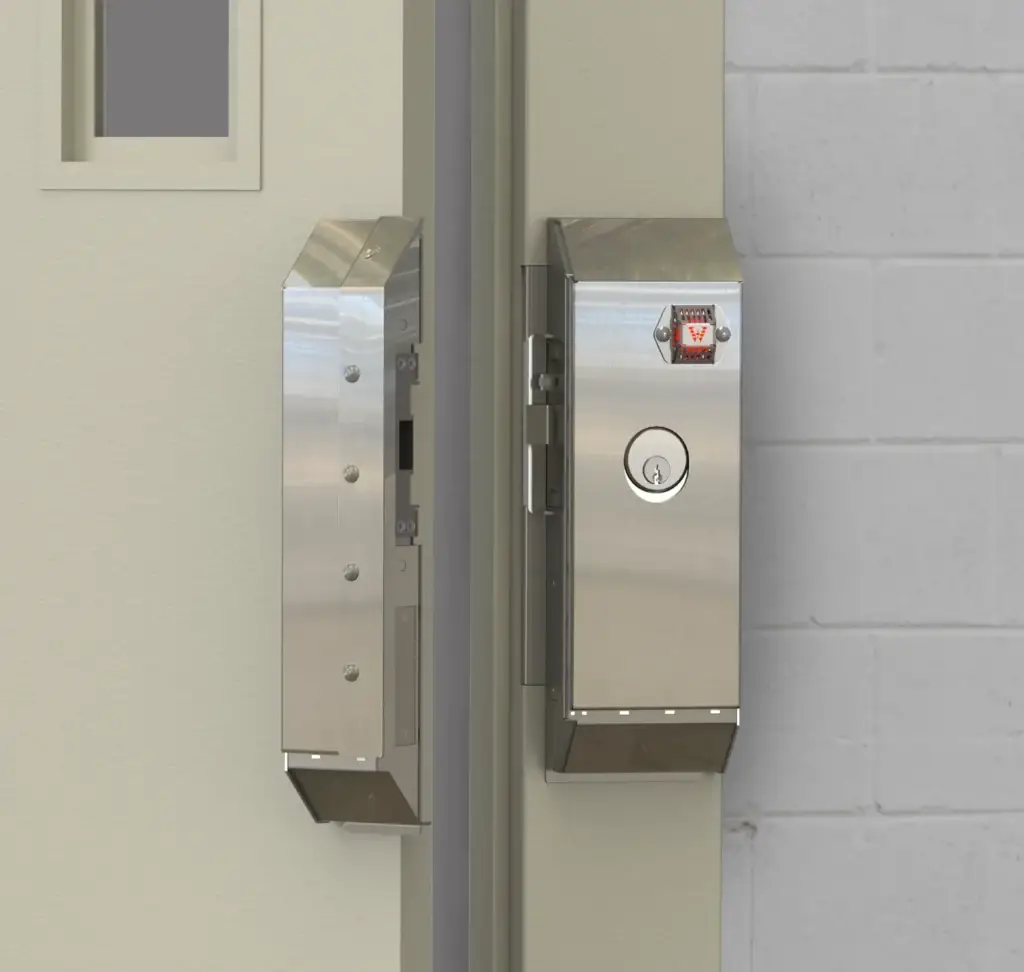
Photo · Original Wedge
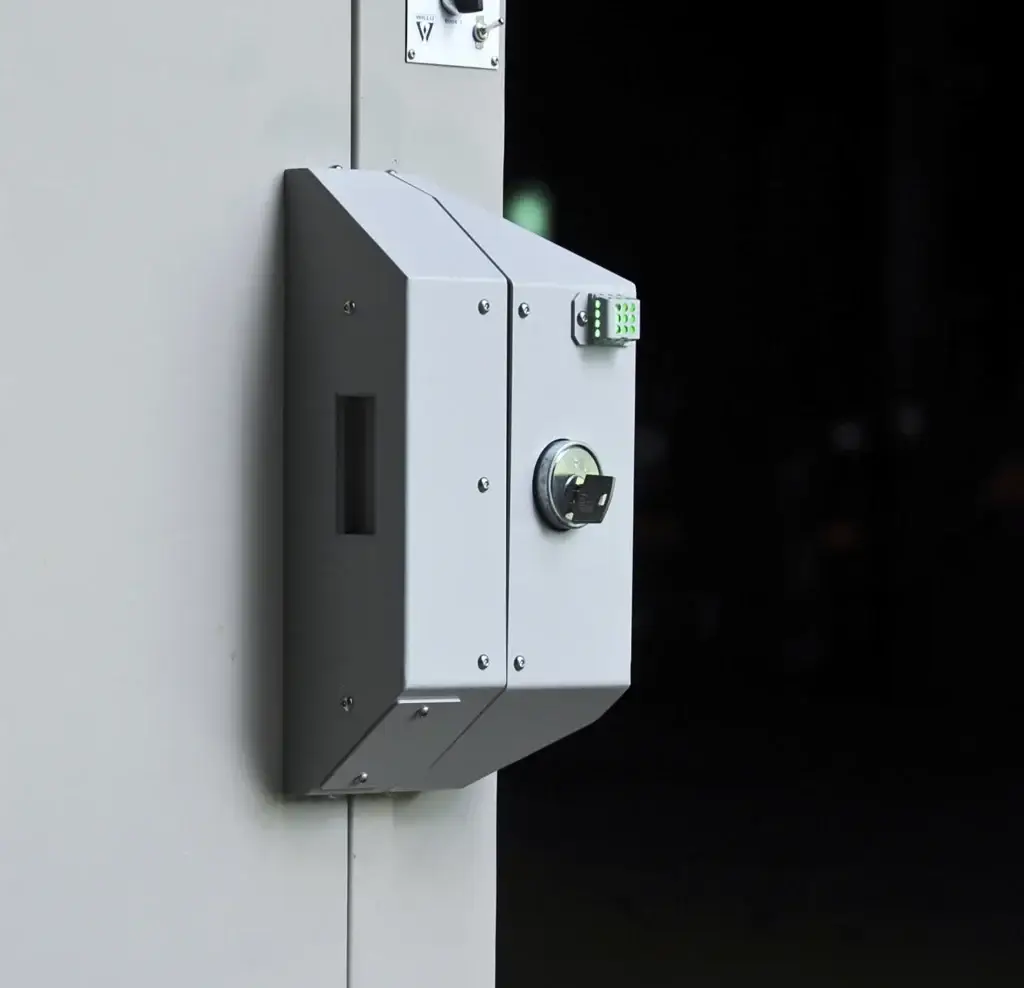
Original Wedge
Best for — Existing swinging doors
Mounting — Surface-mounted
Construction — Reinforced steel
Detention Locking Systems & Controls · Since 1945
Swinging door locks
See the Wedge in operation and find the model suited to your project.
Overview
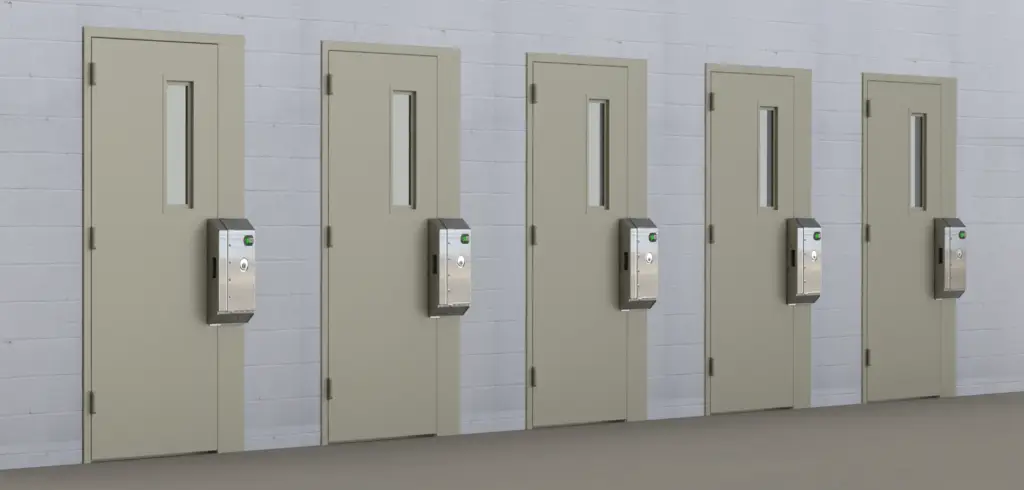
Jail door locks help protect the people who live and work in a correctional facility. Officers need to know whether a door is secure, locking components need protection from tampering, and maintenance staff need access when repairs are required. The Willo Wedge® family combines these features in swinging door locking systems built for detention facilities.
Willo offers Wedge models for upgrades in operating facilities and for new construction. Original Wedge and Wedge SurfaceMax™ serve retrofit projects, while Wedge Slim™ is designed for new doors and frames. The model suited to a project depends on the construction already in place or the door and frame being specified.
Three models
Photo · Original Wedge
Best for — Existing swinging doors
Mounting — Surface-mounted
Construction — Reinforced steel
Photo · Wedge SurfaceMax
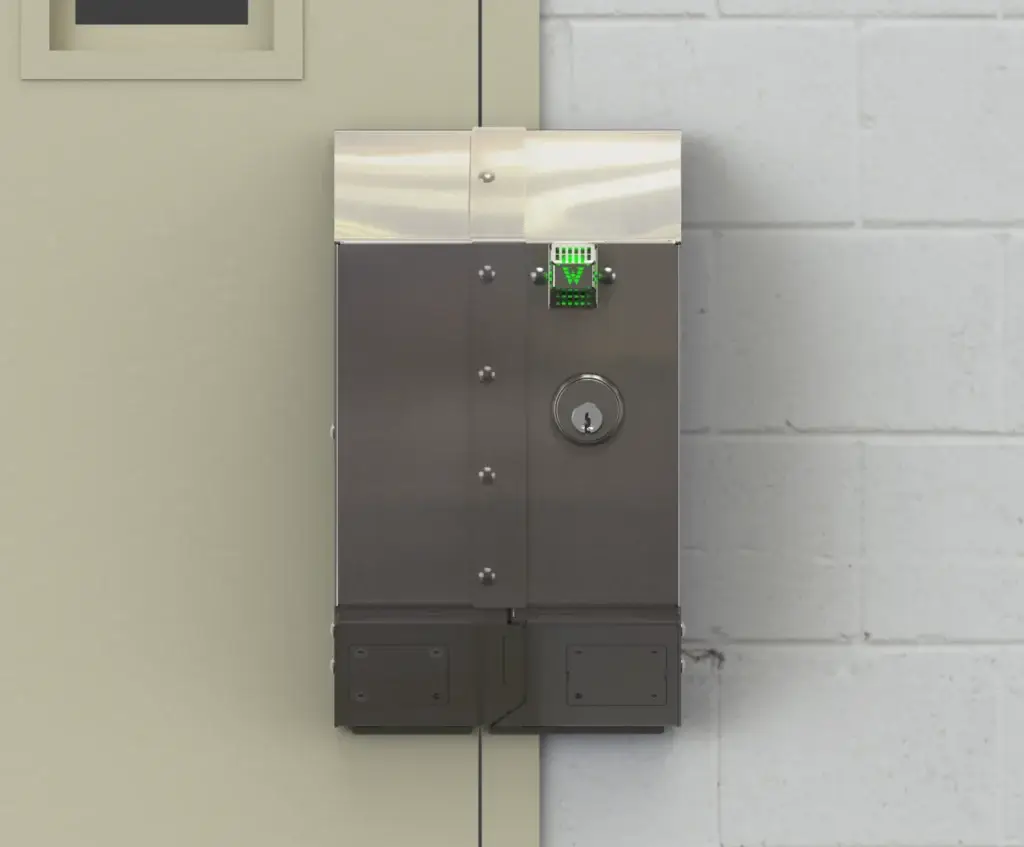
Best for — Hollow-metal doors & frames
Mounting — Surface-mounted, interlocking cover
Construction — Optional stainless steel
Photo · Wedge Slim
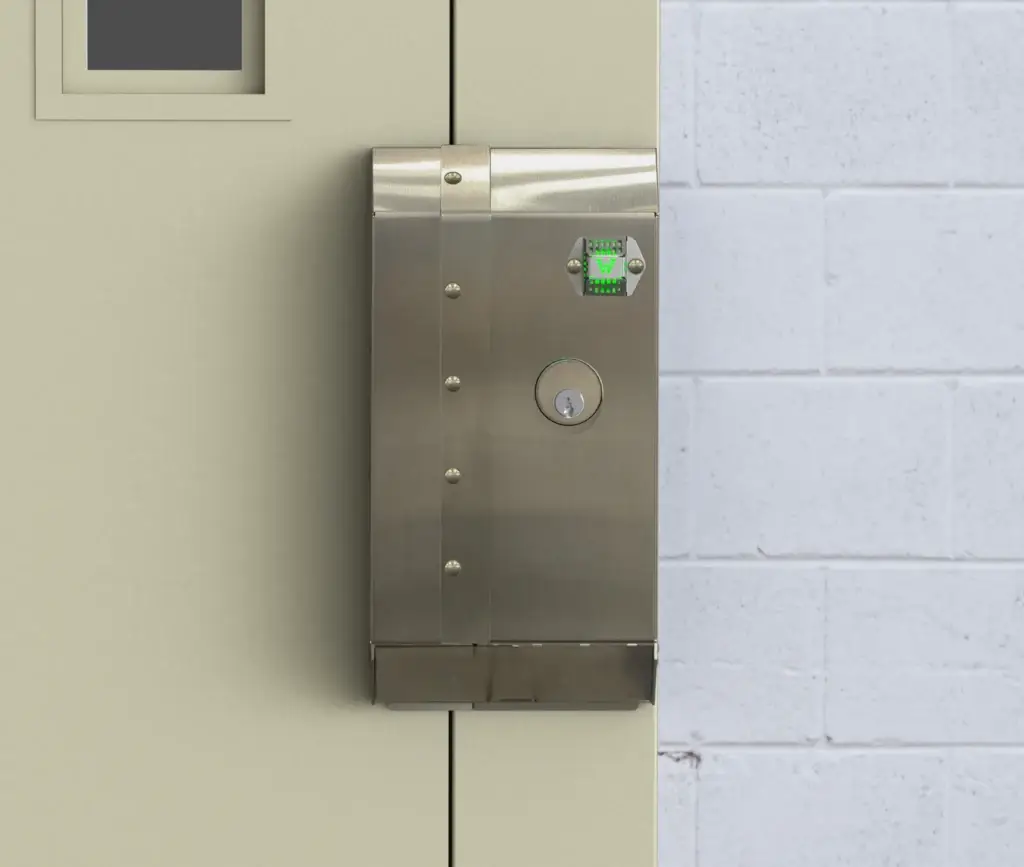
Best for — New construction
Mounting — Semi-recessed in wide-jamb lock pocket
Construction — Stainless steel
Side by side
Feature
Original Wedge
Wedge SurfaceMax™
Wedge Slim™
Project type
Retrofit
Retrofit
New construction
Mounting
Surface-mounted
Surface, interlocking cover & astragal
Semi-recessed, traditional lock prep
Construction
Reinforced steel
Steel or optional stainless
Stainless steel
Gripper™ latch-bolt housing
Yes
Yes
Yes
Double-offset design
Yes
Yes
Yes
Tamper alarm
Yes
Yes
Yes
Status light
Local LED
Local LED
High-intensity LED
Door-position switch
New switch in the Wedge
Door-position switch
Magnetic, control-room monitoring
Debris cleanout port
Yes
Yes
Yes
LatchGuard™ upgrade
Not available
Available
Available
Existing buildings and new facilities present different opportunities to improve door security. A retrofit must work with construction already in place. A new building allows the locking system to be considered alongside the frame and surrounding equipment during design. The Wedge family addresses both situations through models with distinct applications.
The Original Wedge retrofit locking system provides the established surface-mounted approach for existing swinging doors. The Wedge SurfaceMax swinging door locking system builds on that approach with interlocking covers and additional features for retrofit projects. The Wedge Slim detention locking system uses a semi-recessed arrangement developed for standard wide-jamb hollow-metal lock pockets in new construction.
A facility may need support for installed Original Wedge equipment, a retrofit in another housing area, and new doors for an expansion. Willo can discuss all three needs and explain which Wedge model fits each project. The choice depends on the existing or proposed door and frame and how staff will use the door.
Across the family, Wedge models protect locking components, provide local security-status information, and include access for maintenance. The housing, mounting arrangement, and available options vary by model. Willo can explain those differences so owners and staff understand which features are included in the equipment being considered for each door.
The lock, its housing, the door, and the frame all affect whether someone can reach the locking components. The Wedge uses physical barriers around those components to restrict access and resist common manipulation methods. Protecting the parts that hold the door secure is central to its design.
The Wedge's offset design and Gripper protect the latch and roller-bolt area. These are the moving components that must engage correctly for the door to lock. The protective features help restrict access to those parts and resist attempts to interfere with them.
Owners can review how the Wedge protects the components that secure the door. Officers can see how that protection works alongside the door-status indicators. A Wedge demonstration shows the housing and locking components in operation, giving your team a chance to ask how the system would work at your facility.
LED indicators at the door give officers information about its security status. The Wedge also provides a visual and audible tamper alarm that draws attention to manipulation at the lock. Officers can check the status signal and recognize a tamper alert where they use the door.
The tamper alarm alerts staff to manipulation of the lock. The normal status indicator shows the door's security status for the selected lock and model. During a demonstration, Willo can explain what each signal means and which information is shown at the door or sent to the facility's control panel.
Officers in a housing area need to recognize both a normal door-status signal and an alert that requires attention. The Wedge provides these signals at the door. Its tamper alarm uses both light and sound to notify staff, while the selected model and lock determine what the normal status indicators show.
The Wedge includes a hollow receiver and cleanout access so maintenance staff can remove debris from the strike area. Material in that space can interfere with the locking components. The cleanout provides a way to reach the area when it needs attention, alongside the Wedge's tamper-resistant features.
The latch needs a clear path to extend into the receiver and engage. Debris in that space can interfere with its movement. Maintenance staff can use the cleanout access to remove material from the receiver and help keep the locking mechanism operating as intended.
Our preventive maintenance services help facilities care for installed equipment. A newly installed system and an older housing unit may need different work, depending on the devices in use and their condition. Willo can discuss those needs, answer product questions, and provide support after equipment has been selected and installed.
SurfaceMax and Slim are available with optional LatchGuard latch-bolt protection. LatchGuard addresses the gap around a fully retracted latch bolt through which foreign material can enter the lock body. It adds a specific protection feature for facilities concerned about lock stuffing.
The Wedge housing restricts access to locking components. LatchGuard protects a separate gap exposed when the latch retracts. Its purpose is to restrict foreign material from entering the lock body through that gap, adding protection for facilities dealing with lock stuffing.
LatchGuard is available for SurfaceMax and Slim, with compatibility determined by the selected configuration. Willo can explain how it fits the proposed system and which parts are included. That discussion also distinguishes the LatchGuard barrier from the receiver cleanout and door-status indicators, which perform different jobs.
The Fulton County Jail Wedge retrofit case study describes the product's development in response to an existing facility's locking-system challenges. Willo worked with jail personnel to develop the Wedge, followed by a nine-device trial that preceded funding for 950 installations.
The Wedge was developed around problems jail staff were encountering with doors already in daily use. Its housing, indicators, and maintenance access reflect that starting point. The Fulton County work gives facilities a concrete example of how an existing locking problem led to the development and trial of a retrofit product.
Today's Wedge family includes models for renovation and new construction. Each is designed to protect swinging-door locking components and provide useful status information to staff. The appropriate model and options depend on the doors, frames, and controls involved in the project.
Upgrade · patent pending
Residents pack the stuffing gap with tape, foil or paper so the latch can't deadlock. The door looks shut but isn't secure. LatchGuard closes the gap and seals the lock's internals.
See LatchGuardFor architects & specifiers
Every door is different
See the Wedge operate and ask questions about your facility's doors. Willo can explain how the models differ and which options may suit your retrofit or new construction project. Request a demonstration to take a closer look at the locking components, status indicators, and maintenance access.